Last week, East McDowell Middle School (EMMS) hosted LJEA volunteers as they staffed educational stations focused on surface and groundwater, water quality, and how LJEA quantifies the ecological health of our streams.
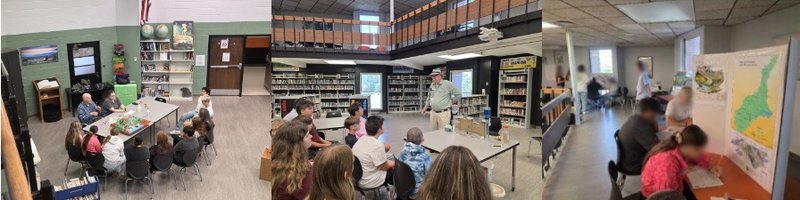
On Tuesday (6 October) about 130 students rotated between three stations in the EMMS media center:
A small watershed model (called an Enviroscape) that allows demonstrations of how activities on our land and in our homes and factories can contribute to water pollution. The important lesson is how each of us can reduce water pollution.
A surface- and groundwater model that helps people visualize our aquifers and how surface water and groundwater interact. Two important lessons from that station are how our streams, and everything that lives in them, depend upon our aquifers and how pollution on the land surface can infiltrate and contaminate our groundwater.
The third station contained a series of posters about related water and environmental issues that students could pick one or more topics of interest and investigate further.
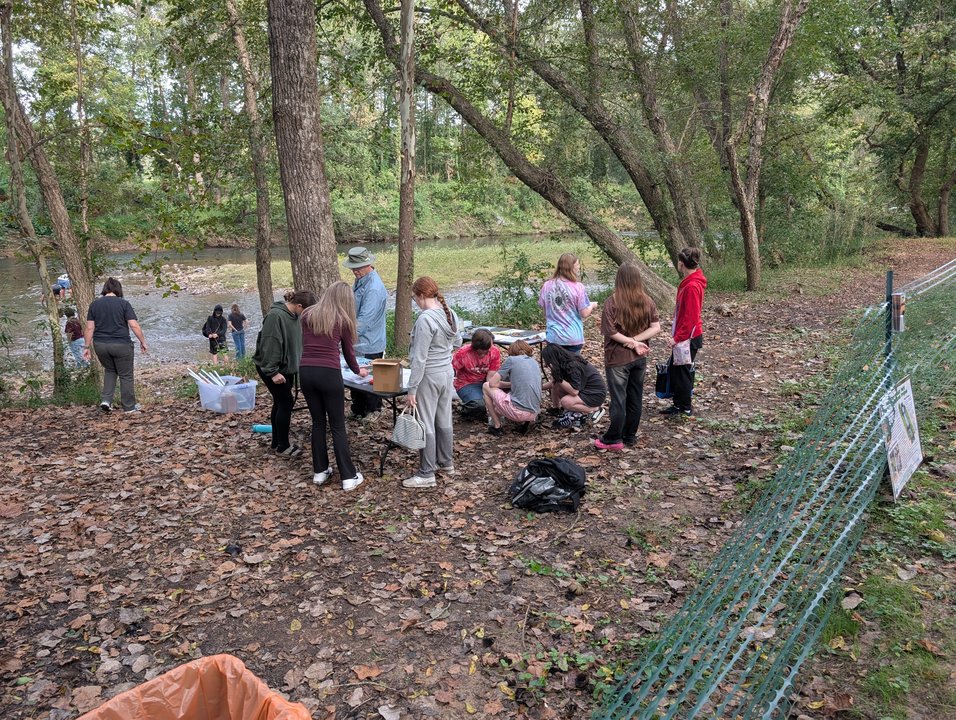
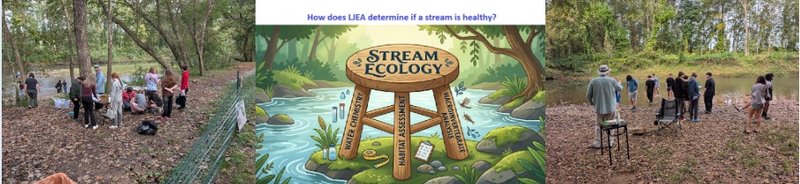
On Friday (9 October) the EMMS students rode buses down to the Joseph McDowell Historical Catawba Greenway and rotated between four learning stations:
A station where students sampled macroinvertebrates (lets call them aquatic bugs) from the Catawba river and learned about how the composition of the “bug” communities can teach us about the long-term water quality of a stream.
A chemical sampling station where students collected water samples and used probes and chemical testing kits to examine the physical and chemical properties of water. At that station, students compared and contrasted data from the Catawba river, Lake James, water from a private well, and treated municipal water.
Another station focused on a quantitative assessment of stream habitat. Along with the other two, this station reinforced that it takes a range of observations of different kinds to determine the ecological health of our streams and riparian areas.
The final station allowed students to collect small amounts of soil, plants, and water that they are using to continue their studies in the classroom.
It turns out that EMMS students were the last group to visit LJEA’s Kids-In-The-Creek educational site along the Greenway before Helene destroyed it. This year’s EMMS classes were the first to return to the site after LJEA’s repairs and restoration. We have more to do at the site but LJEA’s volunteers were very happy to welcome McDowell County students back into their river.